 Everett
 Building a Deck That Holds Up in South Everett
South Everett sees the same weather pattern as the rest of Snohomish County, but a deck built for the mountains or for eastern Washington won't necessarily hold up here. What matters locally is the combination of salt-tinged marine air rolling in off Puget Sound, long stretches of driving rain in the fall and winter, and a moss and algae season that can run eight months or more on a shaded deck. None of that is a reason to skip a deck — it's a reason to build one correctly the first time, with materials, fasteners, and drainage details chosen for this specific climate rather than a generic build.
A custom deck done right for this area isn't just about the decking boards on top. It's the footings underneath, the flashing where the deck meets the house, the hardware holding it all together, and the spacing that lets water and debris move through instead of sitting and rotting. We build decks for South Everett homeowners with all of that in mind, not just the parts that show.
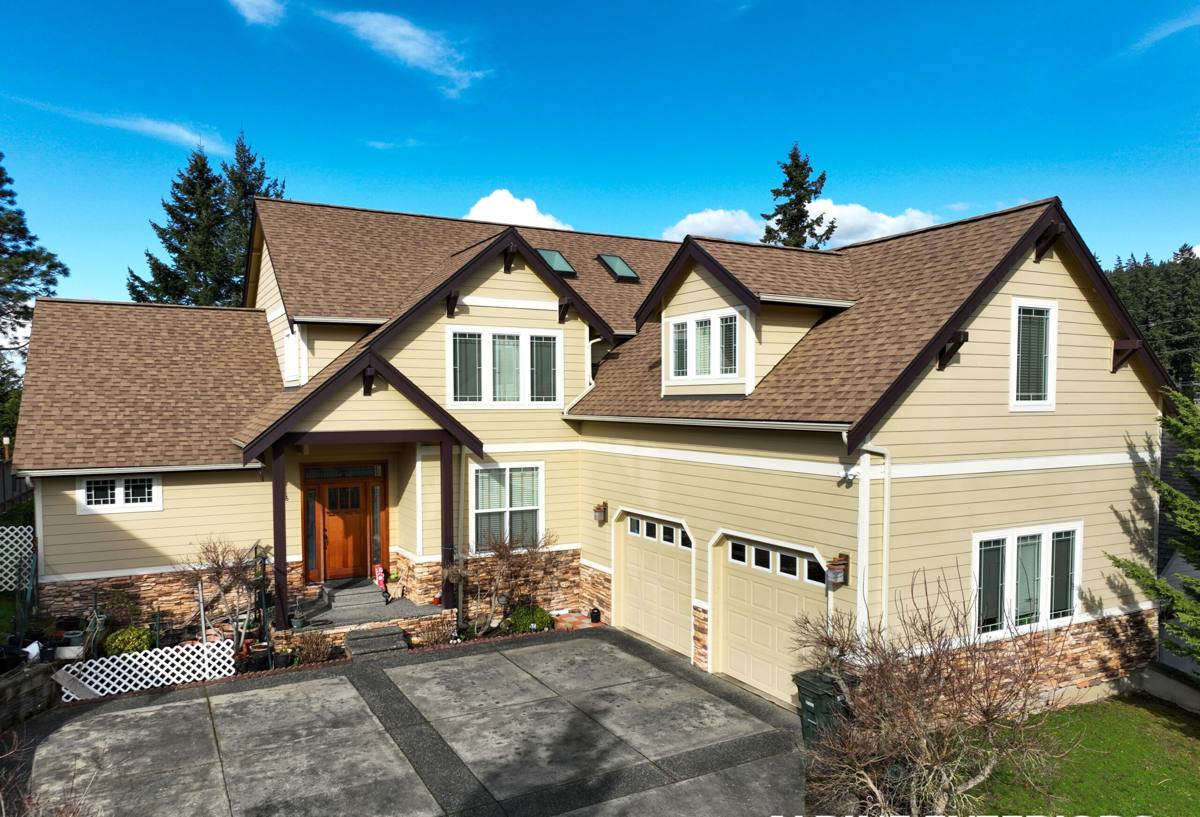
What South Everett Homes Need From a Deck
South Everett is a mix of established neighborhoods and newer infill, with lot sizes and yard layouts that vary block to block. What's consistent is the way people use their decks here — as an extension of the living space for most of the year, weather permitting, rather than a strictly summer-only feature. That means the deck needs to perform in July sun and in November rain equally well.
Moisture Exposure and Ground Contact
Many South Everett lots have compact clay-heavy soil that drains slowly. If a deck's footings and post bases aren't set correctly, water sits against wood and hardware longer than it should, accelerating rot and corrosion. We grade and set footings with this in mind rather than assuming a standard footing depth will drain the same way it would on sandier ground.
Sun, Shade, and Tree Cover
Mature trees are common on older South Everett lots, and a shaded deck dries out far slower after rain than one in full sun. Shaded decks need wider board gaps, better airflow underneath, and more attention to moss control than a deck that gets afternoon sun most of the year. We look at your specific lot's sun and shade pattern before finalizing board spacing and layout, not just the square footage.
Decking Material Options for This Climate
There's no single "best" decking material for Everett — there's a best material for your budget, your maintenance tolerance, and how much sun or shade the deck actually gets. Here's how the common options compare for a Pacific Northwest yard:
| Material | Upfront Cost | Maintenance | How It Handles Our Climate |
|---|---|---|---|
| Cedar | Moderate | Annual cleaning and re-sealing | Naturally rot-resistant and handles moisture well, but needs consistent upkeep to resist moss and graying |
| Pressure-treated fir/pine | Lower | Regular sealing, more frequent board checks | Budget-friendly but more prone to splitting and moss buildup if not maintained on schedule |
| Composite (wood-plastic blend) | Higher | Occasional washing, no sealing | Resists rot and insects well; can still grow surface moss in deep shade if not rinsed periodically |
| PVC/capped polymer | Highest | Minimal — occasional rinse | Best moisture resistance of the group; performs well on shaded, damp decks with little upkeep |
We'll walk through these trade-offs against your actual deck location and how you plan to use it — a full-sun deck for entertaining has different needs than a shaded side deck off a kitchen.
What a Correctly Built Deck Actually Involves
The parts of a deck nobody sees are usually the parts that determine whether it's still solid in fifteen years.
Footings Set for Our Soil and Frost Depth
Footings need to be sized and set to local frost depth and soil conditions, not guessed at. On the heavier clay soils common in South Everett, we also make sure footings and post bases are elevated enough to avoid standing water after a heavy rain event.
Ledger Board Flashing
Where a deck attaches to the house is the single most common failure point on Pacific Northwest decks, because that seam takes on driving rain directly. Proper flashing — installed in the correct order relative to the house's siding and building paper — keeps water from working its way behind the ledger board and into the structure. This is not an area to cut corners, and it's one of the first things we check on any existing deck we're asked to repair.
Fasteners and Hardware
Salt-tinged marine air accelerates corrosion on standard hardware faster than most homeowners expect. We use stainless steel or hot-dip galvanized fasteners and structural connectors rated for exterior, coastal-adjacent exposure — not the cheaper mill-galvanized hardware that can start rusting and staining decking within a few seasons.
Joist Protection
Joist tape or an equivalent moisture barrier over the top of each joist keeps water from pooling in the fastener holes where deck boards attach — a small detail that meaningfully extends the life of the frame underneath.
Railings, Stairs, and Permit Requirements
Any deck built above a certain height off the ground requires a guardrail, and Everett follows the International Residential Code (IRC) baseline for guardrail height and baluster spacing, along with local permitting through the city or Snohomish County depending on your exact property. Requirements cover things like maximum gaps between balusters, stair riser and tread dimensions, and handrail graspability — details that matter for a passed inspection and, more importantly, for actual safety. We handle permit drawings and inspections as part of the build so you're not tracking down requirements yourself.
Fighting Moss and Algae Through a Long Wet Season
Moss doesn't need much encouragement in this part of Washington — shade, moisture, and a still surface are enough. A few build-stage decisions make a real difference in how much moss control a deck needs later:
- Board spacing wide enough to let water and debris pass through rather than collect
- Adequate clearance and airflow underneath the deck, not just at the edges
- Gutters or drip edges positioned so roof runoff doesn't dump directly onto the deck surface
- Material choice matched to how much shade the deck actually gets
No deck material is entirely moss-proof in a shaded South Everett yard, but a deck built with drainage and airflow in mind needs a fraction of the scrubbing and pressure-washing that a poorly drained one does.
Our Process for a South Everett Deck Project
We start with an on-site walk of your yard, looking at sun exposure, drainage, soil, and how the deck will tie into the house before we talk materials or layout. From there we put together a design and a straightforward estimate — no vague allowances that turn into surprise costs mid-project. Once you approve the plan, we handle the permit application and drawings, then move into footings, framing, decking, and railings in sequence, with the ledger flashing and structural connections inspected before anything gets covered up. We finish with a walkthrough so you know exactly what maintenance, if any, your specific decking material needs going forward.
Keeping Your Deck in Shape After It's Built
Whatever material you choose, a little regular attention goes a long way in this climate:
- Sweep leaves and debris off the surface regularly through fall, especially in shaded areas
- Rinse or lightly scrub visible moss or algae before it gets a foothold in board grooves
- Check that gaps between boards stay clear so water keeps draining through
- Inspect the ledger board area and flashing yearly for any staining or gaps
- Reseal wood decking on the schedule recommended for that specific product — don't wait until it looks gray and dry
- Look underneath the deck once a year for standing water or soft framing near the ground
Why Hire a Crew That Already Works in South Everett
A deck built by a crew unfamiliar with Snohomish County conditions can look fine on day one and still develop moisture problems within a few seasons. Knowing how local soil drains, how the permitting process runs through the city or county, and how much moss pressure a given yard's shade pattern creates isn't something you can fully account for from a generic spec sheet. We build decks specifically for this area's rain, salt air, and moss season, and we stand behind the work because we know what actually holds up here and what doesn't.
If you're planning a new deck or replacing one that's showing its age, we're happy to take a look and put together a free, no-pressure estimate — just fill out the form below to get started.